Are “vanity handicappers” as bad as the 30 handicap, 46-point bandits?
Forgive me father, for I have sinned. I didn’t like my score, so I didn’t hand my card in.
There’s a lot said about the World Handicap System setting the environment for 30 handicappers to win competitions with 46 points. It’s a scourge on club golfers, particularly the most competent and honest ones, and a common topic of conversation in the clubhouse.
Less is said about the players who like to keep their handicaps low. Already down about the way they’ve played, and not wanting to compound it by logging in to their app the next morning and seeing the handicap they worked so hard to attain moving the wrong way. They skulk off, the card stays buried in the bag, and they sleep soundly in the knowledge that their precious single figure handicap remains. Nevertheless, they wake up the next morning and feel a bit dirty.
Well, dirty is how I’ve been feeling in the last week. Some background information. I played a lot as a junior and got down to a 12 handicap as a 12 year old. I then stopped playing until three years ago as a 30 year old, when I got the bug again. With a 2 year old at home, my chances to play are limited to somewhere around once a month. I’m not a member of a club, and pay to play each round.
After a summer of being able to play a bit more, I shot the two best rounds of my life back to back, a pair of 3-over par 75s. This took my handicap down from 8 to 4. Do I feel like a true 4 handicapper? Not really. Does it feel great to tell people I play off 4? I’m not ashamed to say yes.
So when I went out for my monthly round at a course that isn’t my regular one (although I have played it probably 5 or 6 times in the past) and hacked it around to record a 13 over par 85, I was really disappointed. I’m realistic and know that, playing as infrequently as I do, I can’t expect to go out and shoot in the 70s every time. But, nursing my post-round beer and feeling sorry for myself as it was, for the first time since starting to play the game again I decided not to compound my misery any further. I said I’d hand a card in, but this time the card was posted in one place only. The nearest bin.
Vanity handicappers. Should we hate them? Should I hate me? Am I just as bad as the 46-point bandits? Is this what I have become?
Now, there’s obviously one crucial difference. Someone with too low of a handicap is very unlikely to take the spoils in competitions. It’s the people whose handicaps are too high that take the glory away from players who play the game in the spirit it’s intended. But it still feels dishonest.
Then again, should every round have to be a competitive one that counts towards your handicap? When I was a kid and a member of a club, there was a clear system. You never put a card in for a friendly round, and that allowed you to play most of your rounds with more freedom- take on riskier shots, chuck another ball down if you duff one, give and receive gimmes from your playing partners, which speeds the game up etc. Then, there were the medal rounds, which was a different kettle of fish. You could still “NR” and go up 0.1 of a shot, which my Dad always impressed on me not to do, but you knew that those were the rounds that counted.
Now I’m not a member and I play less frequently, if I record a card every round it takes away that laid back, friendly side of playing the game. It adds pressure to each shot and an extra kicker if you aren’t sharp that day. Nevertheless, handing a card in each time you play is the only way to get an accurate handicap, whether you play once a week or once a year. And would I be making the same excuses if I shot 3 over again? Realistically, probably not.
There’s a compromise to be had, I’m sure. You can’t only hand in your best scores. Perhaps it’s all about the intention pre-round. Make the call early. I just want a friendly round today, I’m not handing a card in even if I shoot even par. Likewise, I could decide I want to make it a “medal” round and whatever I score, the card will go in. I think that is a fair way forward for golfers who don’t belong to a club. It’s a much clearer picture for members.
The game of golf is so tied in with etiquette, sportsmanship and trust in people to play to the rules properly. That was one of the major things I learned as an 8 or 9 year old starting to play with my Dad and his mates. It’s only one card I’ve not handed in, but even though it doesn’t affect anyone else, I have to say it didn’t feel great. A bit against the spirit of what it’s supposed to be all about. There is suddenly an asterisk next to that handicap I was so proud of attaining.
In any case, I’ll only have myself to blame when I’m still giving 8 shots to my 12 handicap mate, who plays once a week and bombs the ball 20 yards past me off the tee.
Should I be ashamed, or should I be easier on myself? Is my plan for a compromise in the future a fair one? Let me know what you think!
Two childhood friends and contemporaries. Two contrasting careers.
As a junior in Western Australia, Robbie Morrison grew up playing and competing with, among others, Min Woo Lee. He never felt inferior and had his share of victories, even if it felt that his competitor tended to save his best for the big events. At the most recent Pebble Beach Pro Am, with a purse of 20 million dollars up for grabs, Min finished runner up. Ranked 31 in the world, his career earnings edge closer to 11 million dollars. Back in his native Scotland, Robbie continued making phone calls to secure sponsorship for the upcoming Tartan Pro Tour season. Without the funds, he accepts that this season might be his last shot at a career in professional golf.
The last thing I want is to fall out of golf because I’ve ran out of money. Some of it is my fault, some of it is management, but you don’t want it to end that way.
How can a player so obviously talented find himself on the brink of giving up the dream? How do two similarly matched juniors end up going down such different paths?
Robbie’s golfing story is full of near misses and bad luck at bad times. It’s also a story of self-confessed errors of judgement on and off the course. It’s a story of the murkier side of the development tours, where a good sponsor can make all the difference but so can a bad one. However, it’s a story that remains incomplete, and at 29 years old can still have a happy ending. This is the tale so far.
A World Class Golfing Upbringing
As a young boy, Robbie began playing at Kilmacolm Golf Club in the West of Scotland with his Dad. At age 14, he moved with his family to Perth, Western Australia. From here, his game went from strength to strength, getting down to a plus handicap by age 16. His progress was surely due in no small part to the wealth of talent he was surrounded by.
Western Australia was a fantastic spot for pros and elite amateurs, most notably Min Woo Lee. You also had the likes of Jarryd Felton, who was number 5 in the World Amateur rankings at one point, and Stephen Dartnall. At Royal Perth, where I was a member, there was Brett Rumford, a 6 time European Tour winner who I cannot thank enough for all the help he gave me, and Brady Watt. You also had the likes of Stephen Leaney who finished runner up in the US Open, and Curtis Luck who won the US Amateur and Asia Pacific Amateur. There was Brad Logan and Terry Gale who had 45 wins worldwide, Lincoln Reemayer and Gavin Reed. That was kind of my youth, hanging around those guys and learning from them.
Even with the exceptional competition around him, Robbie had an excellent record as an amateur. He won the coveted Kelly Rogers Medal as leading amateur three times between 2015 and 2018, and captained the Western Australia State School Boys team. He reached 4th in the amateur rankings for Western Australia and 16th in the country.
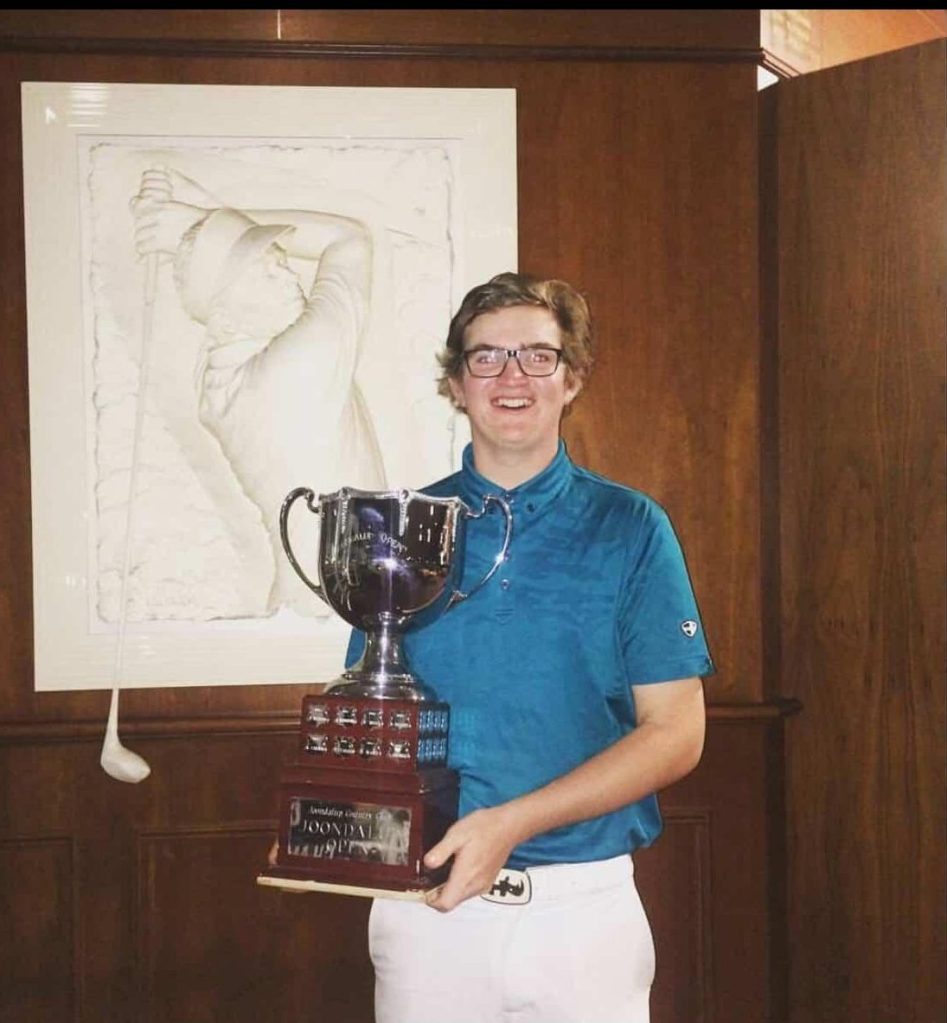
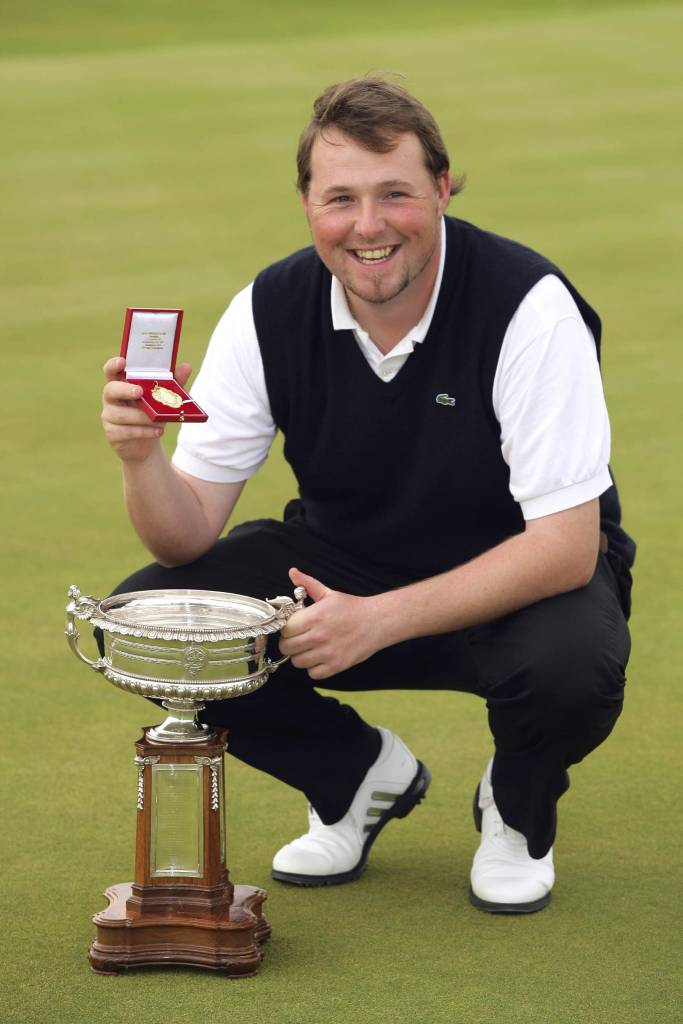
Robbie with the Joondalup Open Trophy
Robbie often describes himself as being a little bit over confident as a younger man. He tells of being humbled by short-game guru Brett Rumford in a chipping competition when he previously thought he was “the best thing since sliced bread”. In spite of this, deep down there was a lack of self-belief at the time, partly as a result of all the talent he was surrounded by. He found it difficult to win events as a junior and as an amateur, often scoring very low, finishing in and around the top 5 without being able to get over the line.
One of his near misses at this time was the 2017 Australian Amateur. He defeated Englishman Jack Singh Brar, 20th in the World Amateur Rankings at the time, 4 and 3 in the last 16. It was a result that raised eyebrows, and paved the way for a quarter final clash with Min Woo Lee.
We were always ranked around the same, but I got outdriven. You play with him every day but you never see him in the full tournament mode. It didn’t feel like an ass-whooping at the time but looking back, maybe it was. I got him back in other events but he did it in the big one.
If you sat with Min in a room, you wouldn’t think of him as Min Woo Lee the professional golfer, but if we played a game of Uno for example, he’d want to crush you. He wouldn’t want to beat you, he’d want to destroy you. And if that became a chipping comp, even more so. That’s what made him so good.
At the 2018 Royal Fremantle Amateur, Robbie lead Min by 2 shots with 5 to play. On a par 4 down the stretch, with the wind blowing off towards the water on the right, on a hole “you’d never hit driver on”, Min pulled out the driver, hit the green and 2-putted for birdie. Robbie dropped a shot on the stretch and ended up losing in a playoff. This mental struggle to close out wins, as opposed to the win-at-all-costs mentality that saw others rise into prominence internationally, is something that Robbie continues to work on to this day.
Turning Pro
A regret of Robbie’s is missing out on the opportunity to gain a scholarship in America. If he could turn back the clock, it’s one thing he would change. Going against the grain amongst his peers at the time, he applied for colleges across the States after finishing school. After initially being unsuccessful, he applied again the following year and was accepted into Kansas State, at the time one of the top golfing colleges in America. However, he was unable to enrol. Due to having a year out of education, he would have needed to start at a community college instead. An early opportunity missed, that possibly could have taken his career in golf down a very different path.
In 2018, at 21 years old, he enrolled in Curtin College in Perth to study Computer Science. After only a few weeks, he decided it was “the worst thing I’d ever thought of doing” and he ended up sitting in the clubhouse at Royal Perth, back at square 1, with his Dad and Brett, trying to come up with a plan for his future.
They asked me what I wanted to do, and I’m like…I just want to play. Dad said he’d been thinking about it too and said, I’ll do you a deal. I’ll give you four years from now and I’ll sponsor you. Brett kind of said the same, that he’d guide me and help me where I needed it, and in 4 years we’ll be into Tour Pro Life.
Robbie turned pro in 2018, getting through Q-School and registering for the Australasia Tour. He travelled extensively around Australia and New Zealand, gaining valuable competitive experience. Compared to the development tours in the UK, the fields were large and the prize money was very good, only adding to the professionalism of the events. Robbie also had an eye-opening trip to play in Papa New Guinea, an event that ended up involving caddie related dramas, thefts and bows and arrows. Worthy of its own article.
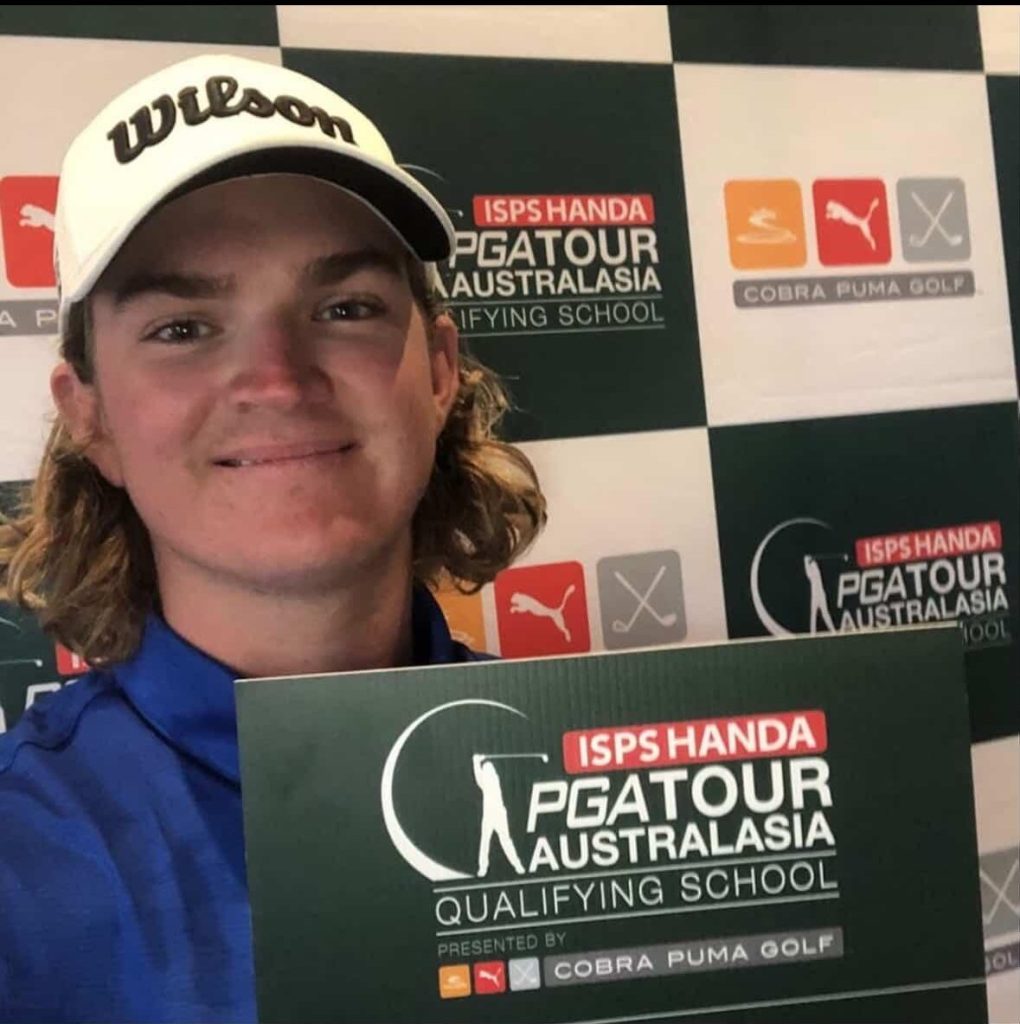
Getting through Q-School for the Australasia Tour.
However, results weren’t as good as hoped overall, with Robbie losing his status after finishing 101st in the Order of Merit- a place in the top 100 would have been enough to secure a spot for the following year. The mentality issue raising its head.
I was probably too laid back. I turned up to events thinking I’d be fine, I’d play well no matter what, not really realising that I was trying to keep a job at the end of the day. I think I was too young, maybe not age wise but maturity wise, maybe not understanding everything that was going on around me.
Meanwhile, at the same time, Min Woo was making international headlines upon making 2 top-5 and 2 top-20 finishes in his first handful of starts on the European Tour. Closely matched as juniors, the fine margins separating them was threatening to turn into a large gulf.
After missing out completely on Q-School for the Australasia Tour the following season, Robbie fought his way back in. After moving to Sydney and finding a good sponsor in Precision Golf, his unphased and laid back personality, on this occasion, came up trumps.
They asked me what events I was going to play if I didn’t have my card for the year. I said I’d just go and Monday qualify for everything, it can’t be that hard. I was still too cocky for my own good at this point. I drove down to Melbourne from Sydney, an 11 hour drive- I recommend flying- went out, shot 5 under and qualified no problem. I couldn’t believe it. All of a sudden, I had this flicker of hope out of nowhere, and had qualified for the 2nd biggest event on the Australian calendar at the time.
Not only did he qualify, he also played very well and made the cut. Unfortunately, the weekend didn’t quite go to plan after a falling out with his caddy, who arrived 15 minutes before tee-off and immediately went to ask Robbie’s playing partner for an autograph. Nonetheless, his excellent performance sparked a re-rank, and just like that he was back on tour. Fresh hope, fresh impetus.
An Unhappy Homecoming
When attempting to rise through the ranks of development tours, there is no escaping the vital importance of sponsorships. With money behind you, you have the freedom to concentrate on your game. Money is pivotal at this level, and golfers cannot turn it down. But it is never a guarantee, it can be given and taken away, and it doesn’t always work out as planned. Unfortunately, Robbie discovered this the hard way.
At a practise round for an event on the Australasian Tour, he was introduced to LPGA superstar Christina Kim, through Min Woo and Min Jee Lee.
Amazing person, kind of an Ian Poulter for America. She was fantastic with me, and she invited me to a barbecue with players, caddies and sponsors. I thought amazing, I’ll be there. And while I was there I met this manager who looked after some amazing players. And he kind of talked me into going back to the UK, that’s where some of the best players in the world are, it’ll be easier to get you around, so we’ve got to do it.
It seemed to make sense. While the Australasia Tour is a fantastic entry into professional golf and sets you up for the Asia Tour, the clearest route into the big time was to get on to the European Tour back home. He was promised starts on the Challenge Tour, one step down from the European. If he could perform well, anything was possible. Still in his mid-20s, it was an offer that he couldn’t turn down.
In Robbie’s words, the “red flags” started appearing early on. All funds and sponsorships were to go directly through the manager, so he had no real idea of his incomings and outgoings.
Just days after landing back in Scotland, Europe went into lockdown as a result of the COVID-19 pandemic. Once the days of lockdown and playing Call of Duty for hours with Min every night passed, more red flags emerged. The Challenge Tour starts he felt he was promised, 14 in total, became 6.
Soon after, he received an email to say that his manager’s hands were tied, and he couldn’t get him invites to any Challenge Tour events. He was advised to continue playing Tartan Pro events, one level further down the ladder, but to continue sending bills through. Eventually, he received a phone call to say the money was all gone, ties were severed, and he was back to square one.
I didn’t know what I was going to do. I was living with my Grandma at the time, and it was all a messy situation. I was on the opposite side of the world to my parents and my support system was no longer close to me. I didn’t have anyone to chat to, I’d been away from my schoolmates for 13 years. That isolating feeling of being in lockdown, that many people can relate to, caused me to eat more, almost as a distraction. I’ll be honest, I fell into a really dark place. I was looking at my clothes thinking: “there’s no way I’m going to fit into any of these”. It became debilitating.
At that stage in his life, still a young man, Robbie admits that mistakes were made along the way. Managing a budget when trying to compete all around the UK is not an easy task. Ask any professional, and they’ll tell you it’s one of the hardest parts of the job. Some expenditure could have been trimmed, and with the benefit of hindsight and experience he would have approached aspects of this time differently. What ifs remain, some questions are still unanswered, but what is for sure is that the episode was an example of the fine lines that can make or break a career in professional golf.
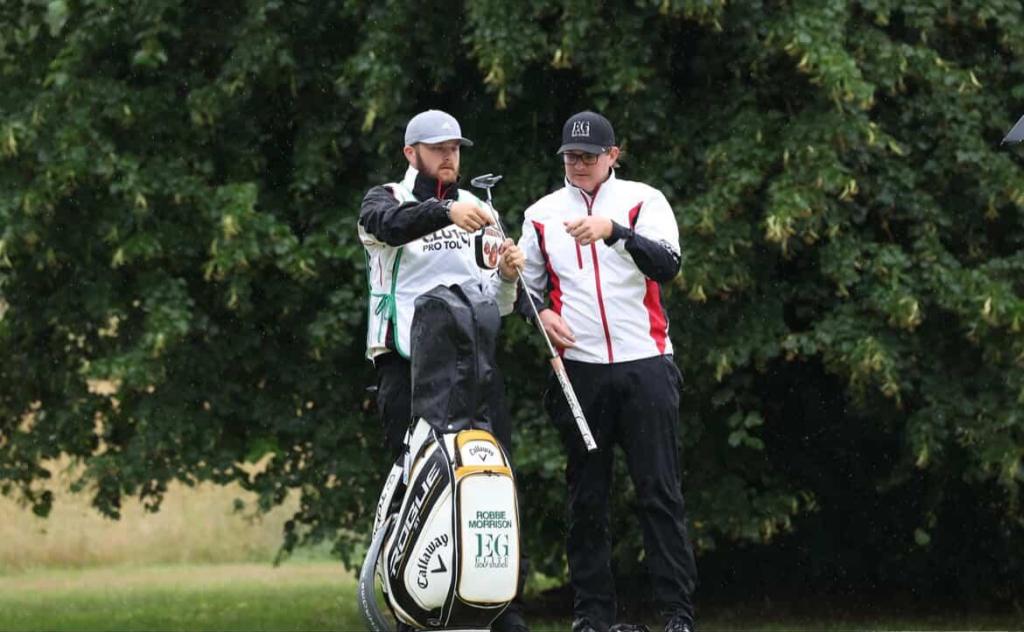
Robbie back competing in the UK on the Clutch Pro Tour.
For his childhood friend Min, the story off the course couldn’t have been more different.
Min had a healthy amount of money donated into his career, from a guy who believed in him and wanted to be a part of it. With that money, you never have the issue of- “if I play this week and I don’t make any money, I won’t be able to play next week.” It gives you the freedom to just be able to play.
We used to chuckle because he used to go to the range and hit drivers as hard as he possibly could, then wedges from 140 yards in, then go to the putting green and only hit 8 and 12-footers. It was like, “what is this kid doing?!” But Min’s coach at the time saw the way the game was going, and knew the exact pathway to enable and evaluate his game. He had all the correct people around him, and he obviously had the hunger as well.
It is clear talking to Robbie that there is no sense of jealousy. He is proud of his friend’s achievements, and seeing Min conquer the world is a source of tremendous inspiration and motivation. But, at that time, in his Grandma’s house, suffering mentally, he must have been wondering what might have been.
It was a low. In his career, in his life. The next couple of years were a struggle on and off the course. His mind was elsewhere, and he was desperate to return to Australia. His success on the course was varied, and more sponsors came and went.
He describes 2022 as the year of the near misses. On the EuroPro tour, the now defunct feeder to the Challenge Tour, he finished one place outside of a spot in the Tour Championships. He narrowly missed out on Open qualifying, and missed the cut by one in the first stage of European Tour Q School.
A Mentality Shift
Robbie recognises that he has made mistakes in his career to date. He turns 30 next month. He’s not a hopeful junior anymore, but he still has the chance to get things right. As he says, if he didn’t believe he was good enough, he wouldn’t still be picking up the clubs. He hasn’t given up hope, and after a difficult few years, he is trying to reignite the fire inside him.
I’ve been working with Chris Kirkland from Unlock Better. We’ve noticed that I’ve gone from being this hungry guy, wanting to destroy people on the golf course, to being defensive. I map out my round and think, I need to birdie this one because I won’t birdie the next one, and then end up missing cuts by one. I kind of worked out that I optimise myself when I’m somewhere around second to fifth on the leaderboard. The times I’ve won events have always been from behind.
I wish I could give the answer to that, and it’s something Chris has been working on with me. Trying to find that switch on mechanism. I’ve been a bit too laid back over the years. I have that “it’ll happen when it happens” thing, but you have to make it happen, not just wait. I’ve realised, this is probably the last year I’ll really be able to put my heart and soul into it.
Of course, what Robbie also needs is sponsors. With the clock ticking before the season starts, there’s no guarantee he’ll be able to compete at all. He tells me it’s currently a case of asking 100 people and hoping that one or two say yes.
It’s all about trying to find the right people to come on board. Guys that understand the journey that I’ve been on, who understand what’s happened and believe in me. For them to come in and enjoy the ride together. You find that correct sponsor and the doors open that previously haven’t.
He finished last year a respectable 41st on the Order of Merit on the Tartan Pro Tour, and that’s where he plans to compete again in 2026. He already has one victory on the tour behind him, and he’ll be hoping to add to that in the near future. He would also like to compete on the Clutch Pro Tour, which is mostly based in England and is another entryway into the Challenge Tour.
The goal is to reach the top 250 in the world. He knows it won’t be easy. But it’s possible. And if he ever doubts himself, he shouldn’t lose sight of what an exceptional amateur he was. That player is still in there. He’s never left.
What advice would he give his younger self?
Go to the range, hit drivers as hard as I can, hit wedges from 140 yards and practise 8 and 12 footers!
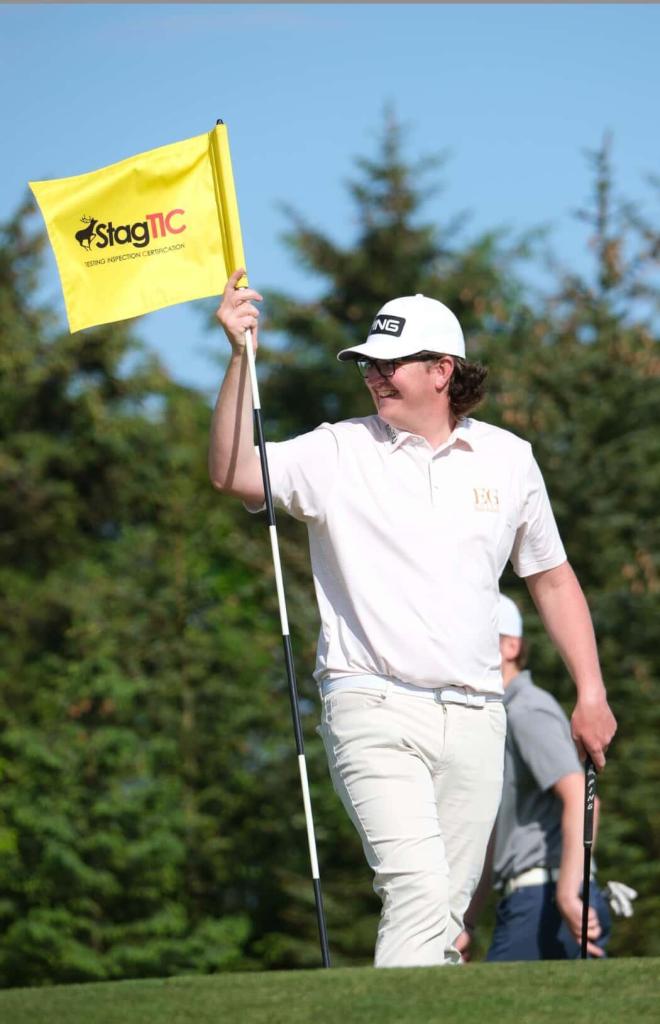
Smiling even in the heat of battle.
He has an uncanny and charming ability to laugh at himself. But I suspect there are a few regrets, a few pearls of wisdom he would love to be able to go back and give himself with the experience he has gained. Then again, what would be the point? What has been and gone can no longer be controlled. You can only look forward. And that’s what Robbie is doing. Looking forward, to at least one more season of chasing his dream. It may well prove to be his final chance.
Thank you for reading. You can find Robbie on Instagram @robbiegolf1 and us @tales_fromtheclubhouse or on X @from_theclubhouse
The Clutch Pro Tour is full of people who are chasing their dreams. People who have made sacrifices and taken risks to pursue a life in golf. A life on tour. For Andy Crook, it’s no different.
Only, he’s not been chasing tournament victories, a Challenge Tour card or lucrative sponsorship deals. His vantage point is a different one. At every Clutch event, Andy is there, telling stories with his photographs.
But his job isn’t just about taking pictures. His role is a vital one in giving unheralded, up and coming golfers the chance to showcase themselves on social media. He takes pride in his work and joy in seeing players progress through the ranks and on to bigger things. He’s the man the players tuck in their shirts and straighten their hats up for when they see him coming over the hill on his buggy. This is the story of life on tour, seen through a different lens.
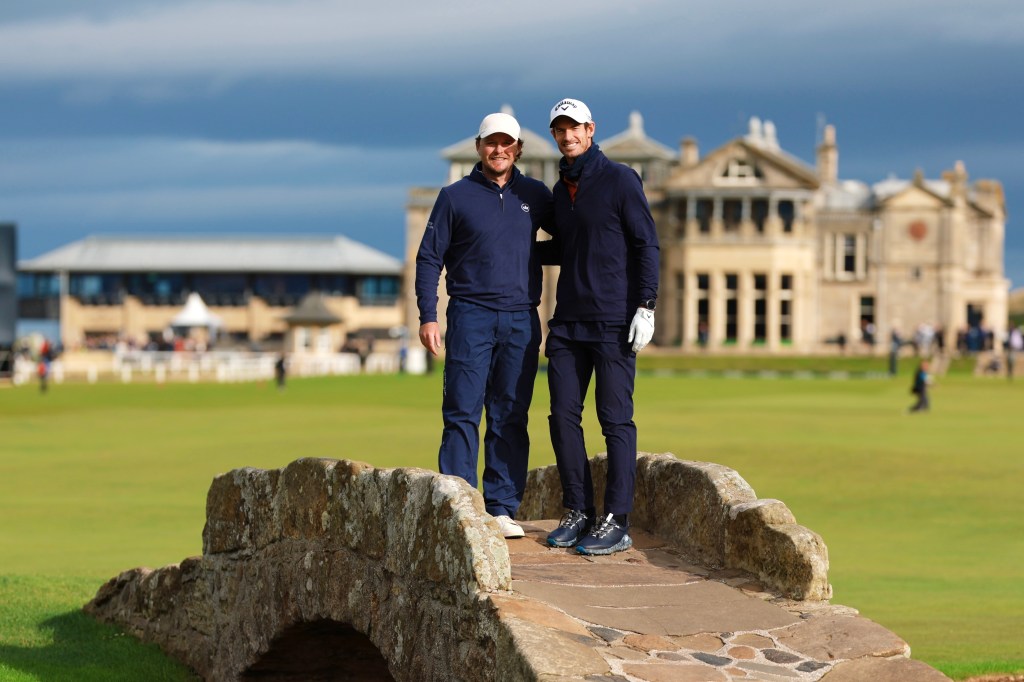
Eddie Pepperell and Andy Murray at the 2025 Dunhill Championship on the Swilcan Bridge. Eddie is one of my favourites and someone I have got to know a little. This image was shared by Andy Murray and is probably one of my most viewed photos…just a shame he never tagged me in his post!
The Journey into Photography
On 23rd March 2019, Andy took a voluntary redundancy and an early retirement in order to dedicate his full attention to golf photography. He decided, with his wife’s blessing, to give it a try for one year and see how it panned out.
One year later to the day was one for the history books. For all the wrong reasons. The first covid lockdown was announced in the UK, and everything came to a standstill. While he had managed to just about break even in his first year, this was an unhappy anniversary. With everything shut down and sport being put on the back burner, it could’ve been a premature end to Andy’s ambitions. Thankfully, opportunities knocked.
“Literally everything came to a grinding halt. Just prior to that I became friends with Chris Hanson, and he’d just started up the 2020 ProTour. For a couple of months everything was just totally focused on the pandemic and nothing else. But then golf was one of the first sports to open back up. I did a couple of events with Chris, and I did one or two local ones. But then I was contacted by Tom Hayward, who was just setting up the Clutch Pro Tour. Tom said he really liked my stuff and asked if I wanted to come and do some work for him. Here we are, 5 years later.”
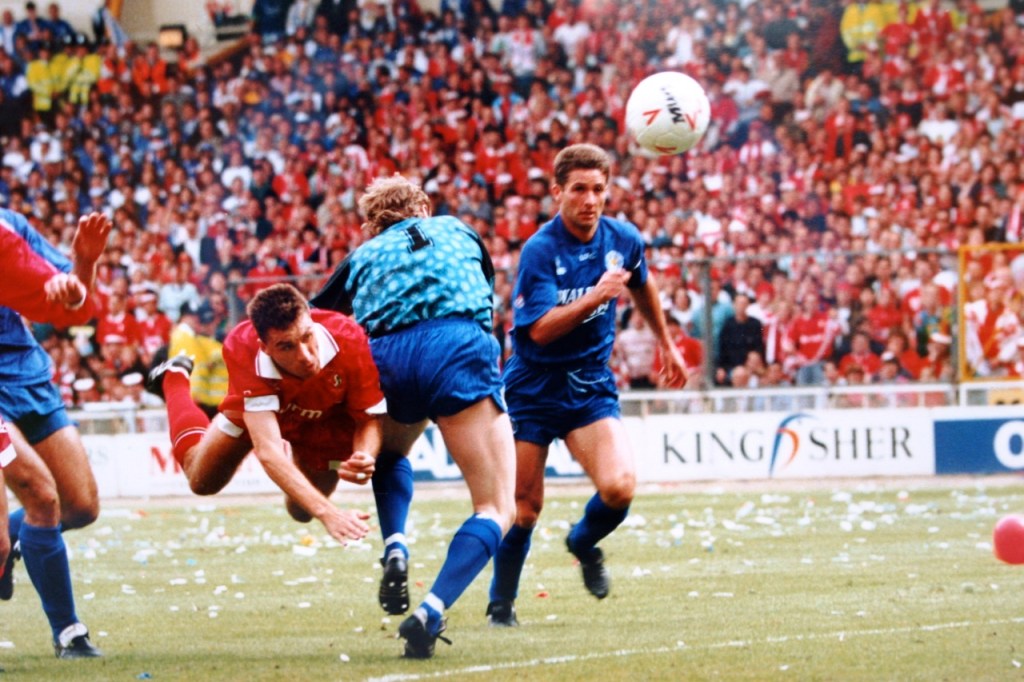
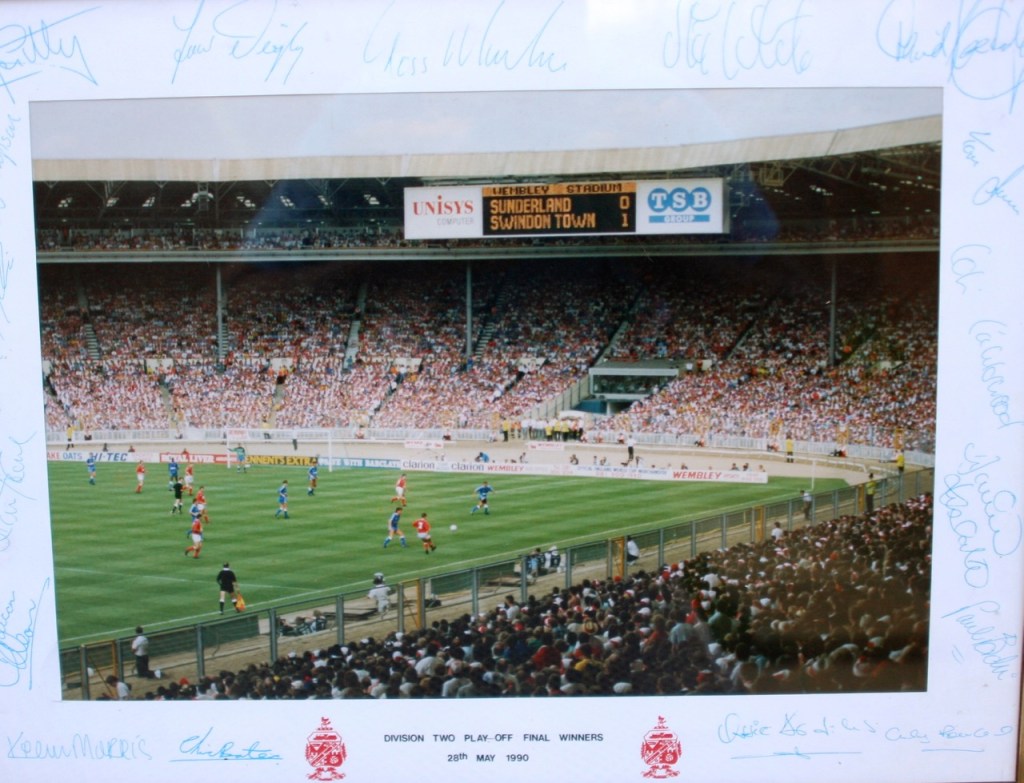
For Andy, however, it wasn’t always golf. He got his break in photography through his local football club, Swindon Town. He took his camera along to Wembley in 1989 when they faced Sunderland and took a photo that impressed his family and friends. He asked the club permission to make copies and sell it. Not only did they agree, they were so impressed that they offered him the opportunity to work for the club the following season.
After 5 enjoyable seasons at Swindon, his focus had to return to his career with the Royal Mail. Photography went back to being a hobby for the best part of 10 years. After a small stint in the early-2000s following a local superbike rider, Andy finally decided to give golf a try.
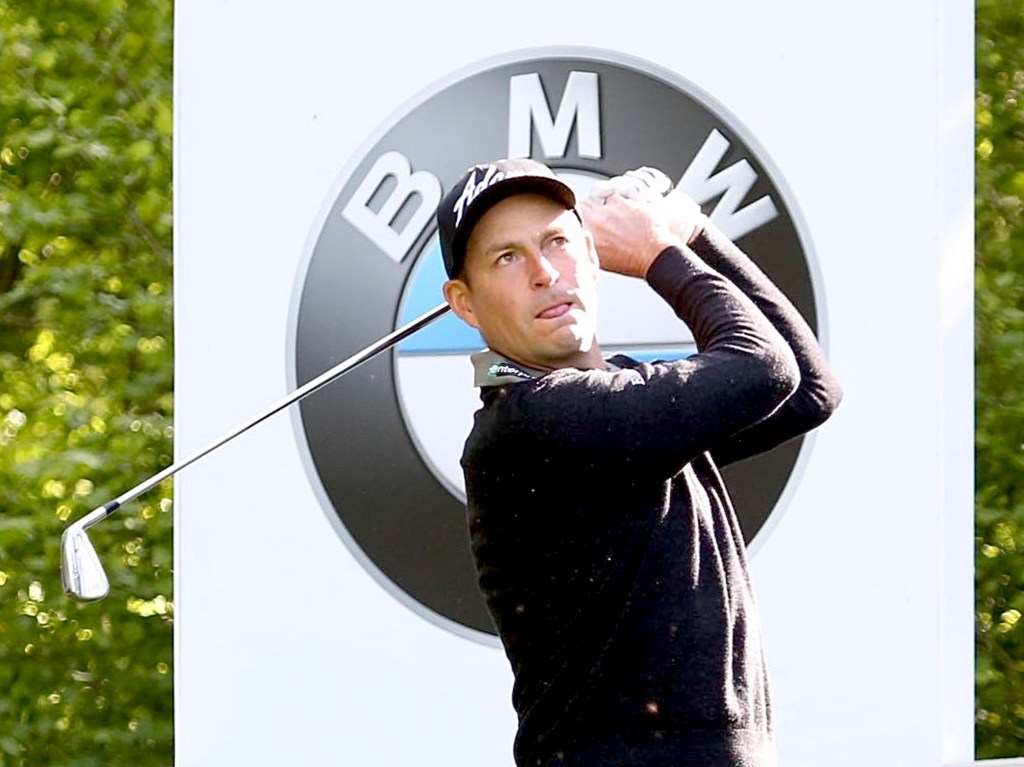
“I always followed David Howell, who was a local Wiltshire golfer. I went to the BMW pro-am in 2013 and took some pictures of him and that was kind of my big break. I sent the photos in to the Swindon Advertiser and they published them. Jordon Smith is from my hometown and he came on the scene at around the same time, so I went to a few events and took some pictures of him too.
The Advertiser were great in getting me accreditation so I could attend events more formally and build friendships with some of the players. I gave the players the photos afterwards, which wasn’t necessarily a great way to make money, but it started a little portfolio and gave me the chance to get some visibility and build up more of a following on social media.”
David Howell in the Pro Am at the BMW Championships at Wentworth. The first golf photos I got published and the start of my golf photography journey. I will always be thankful to my local newspaper The Swindon Advertiser for the support they gave me, and still do.
Andy wanted to make the move into golf photography. But it’s fair to say that, in the Clutch Pro Tour, he found something much bigger and more meaningful, and the sense of pride and love for what he does shines through.
The Clutch Pro Tour
“I’m really proud to see what Tom’s created and being part of that as well. I think what we do, and what I do, some of the principles in which we work I think are really unique.”
Mainly based in England, as well as start and end of season events in the Middle East, Clutch is an official Satellite Tour to the Challenge Tour, the second tier of European golf. There have been a host of names who have gone on to big things, and Andy has been there up close to witness their rise through the ranks.
“I love supporting the players and seeing how they’re furthering their careers. I’ve been fortunate enough to be able to follow Jordan Smith, Laurie Canter and Eddie Pepperell who are the local boys. I love the opportunity to photograph them. Likewise, you’ve got people like Brandon Robinson Thompson, Marco Penge, Dan Bradbury, Dan Brown, George Bloor, Gary King…seeing those lads progress and advance is the thing that gives me more pleasure than anything else.”
Andy describes a family environment where there is a great level of camaraderie, even though everyone is ultimately fighting for position on the order of merit, and for their futures in golf. And in his role, he is absolutely a part of that atmosphere. He gets the opportunity to play practise rounds with the players, receiving a wealth of tips for his own game in the process.
For him, the best part of his job isn’t taking the photo of the day. It’s getting a smile and a thumbs up from a player after he’s just sunk a putt. It’s seeing the players quickly tidying themselves up knowing that the camera is about to be fixed on them. It’s about being part of something bigger.
That is reflected in his unique approach. At every event, Andy guarantees that every single player will be photographed, regardless of their status, reputation or performance on the day. In his eyes, everyone has paid the same entry fees, so everyone will get a good photo to help boost their profile on social media and attract sponsorships- effectively the lifeblood of golfers at this level.
Jack Yule, who has been successful at DPWT Q School and jumped from Clutch to DPWT full card for 2026. It’s been great to watch and support players like Jack and I look forward to photographing him at his new level.
“It doesn’t matter whether you finish 1st or 152nd, you’ve paid the same so everyone will get photographs from me. There’s not been a single event from the very start where a player hasn’t had photographs. On day 1, 100% of players will get one, on day 2 maybe 80% and then after the cut, everyone has photos again. The deal we have with clutch is that the players are entitled to use the photos for their personal profiles. It’s not just about trying to capture the money shot, it’s the lad who’s trying hard to raise his sponsorship money to keep his season going who’s got a couple of logos with his sponsors name, capturing that for those lads is more important for me than getting the glory shot.”
It’s Not Always Sunshine and Birdies…
Practise rounds with professional golfers, the best courses in the country, trips to the Middle East, camaraderie and a family environment; it sounds like the dream job. But bad days happen, too. And the work is far from easy.
“A bad day is not getting the best photos, it’s when it’s pouring with rain, it’s a miserable wet horrible day and everything’s soaking wet. The camera’s bounced off the buggy, which it does on numerous occasions, and you snap a lens. Those are the downsides, when you’re in the heat of the event and you’re thinking ‘crikey, I’ve got to get from the 9th to the 16th before they finish’ and you go across a bumpy bit of rough and all of a sudden your camera’s flying all over the place. Those aren’t the good days, those are the expensive days.”
It’s not just the weather that causes complications. There are apps that tell you exactly where in the sky the sun will be at a given time, so Andy knows where not to try to get photos from. If working at a new course, he uses a website called Pro Visualiser in order to map his way around. Another big challenge is ensuring that, by being in the perfect vantage point to photograph one player on one hole, he doesn’t find himself in someone else’s way.
If you think the job is just about taking photos, you couldn’t be more wrong. A huge amount of preparation is required, a huge amount of thought, particularly at this level where Andy is by himself with a field of 162 golfers and no coverage to refer to the scores. He depends on the players completing their live scoring on an app so that he can judge the best places to be, and which players will be the big stories of the day.
Photograph a football game and you just need to be by the side of the pitch. Photograph a golf tournament and there’s 162 players stretched across 7000 yards. Thankfully, Andy is a pro, well versed on the nuances of trying to cover such a logistically difficult event. He says only one event springs to mind as an example of a real bad day at the office, although he’s reluctant to open old wounds.
“You never want to put a player off. Luckily they’re very good and they understand what you’re trying to do so I haven’t had too many of those days. But bad days do happen, and we had…a bad day. It was a catalogue of errors. But it’s all forgotten and done. We’re all friends again now.”
There is also the human element to think about. While he loves capturing players in their best moments, holing putts and climbing the leaderboard, it is much less comfortable to be taking pictures while players are in the depths of despair. He recognises that, sometimes, it’s best to put the camera away and head elsewhere.
Telling Stories with Photographs
There is one phrase that Andy often repeats when talking about his work. “Telling stories with photographs.”
So what stories do his photographs tell?
They don’t tell the stories of massive prize money, majors and global fame. They tell the story of young men and women chasing their dreams. Some will make the big time, some won’t. But for now, they’re all in it together. And it’s people like Andy who are there year-round that help create that atmosphere of camaraderie and togetherness. You can see it in the photos. Smiles, thumbs up, even in the heat of battle with futures on the line.
When the photos are of Rory McIlroy and Scottie Scheffler, it’s because there’s a local lad, or someone who has worked up through the ranks of Clutch, alongside them. It’s special for Andy, no doubt, to get up close to those massive names. It’s a sign of his success and the journey he has been on, a photographic chapter in his own story. But it’s not what inspires him most.
With that in mind, it is interesting to hear Andy talk about his future goals. While he attended one Masters as a spectator which gave him the initial itch to get into golf photography, he is comfortable with the fact he is highly unlikely to ever get accreditation for that event. The Open remains the one, realistic remaining ambition for him. So far, he hasn’t been successful in getting accreditation.
Yet, should he make it there one day, you can be sure that he won’t just be following the big names around, starstruck, like so many of us would. There’s plenty of others who’ll be doing that already. No, he’ll be following the local lads, the Clutch boys, the underdogs. He always has, he always will.
Below are more photos hand picked by Andy for this article. All of them mean something special to him, and tell part of his story through photographs.
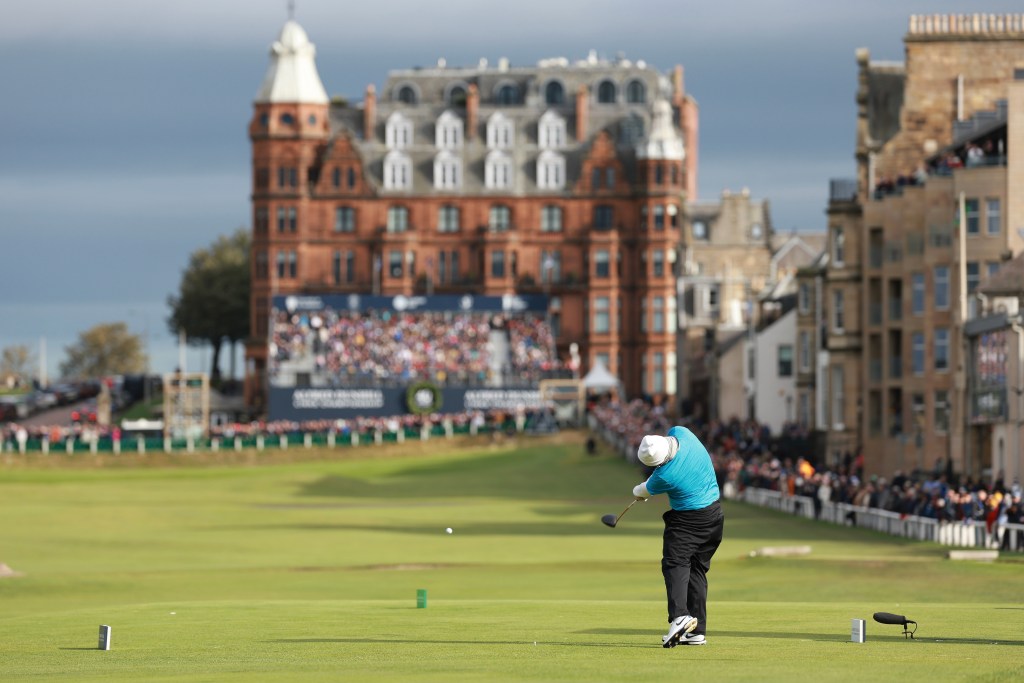
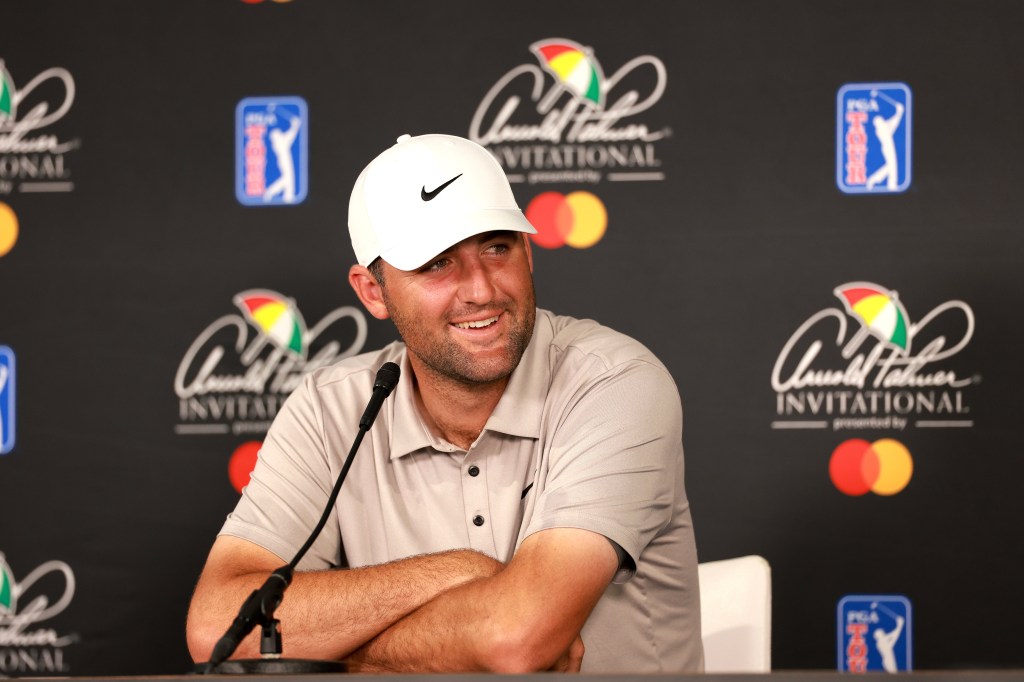
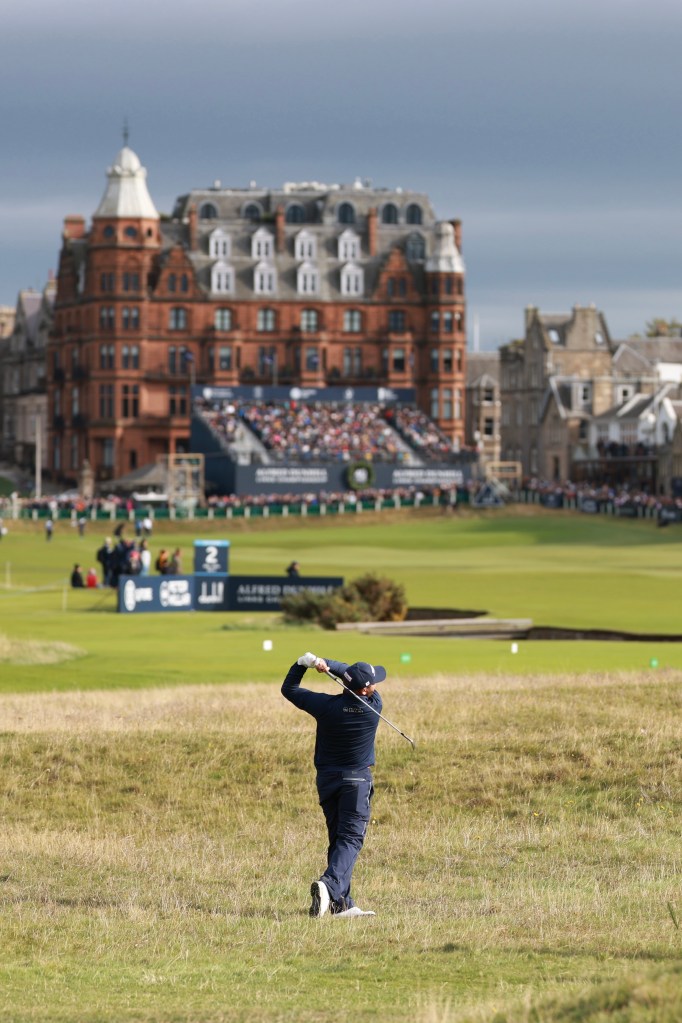
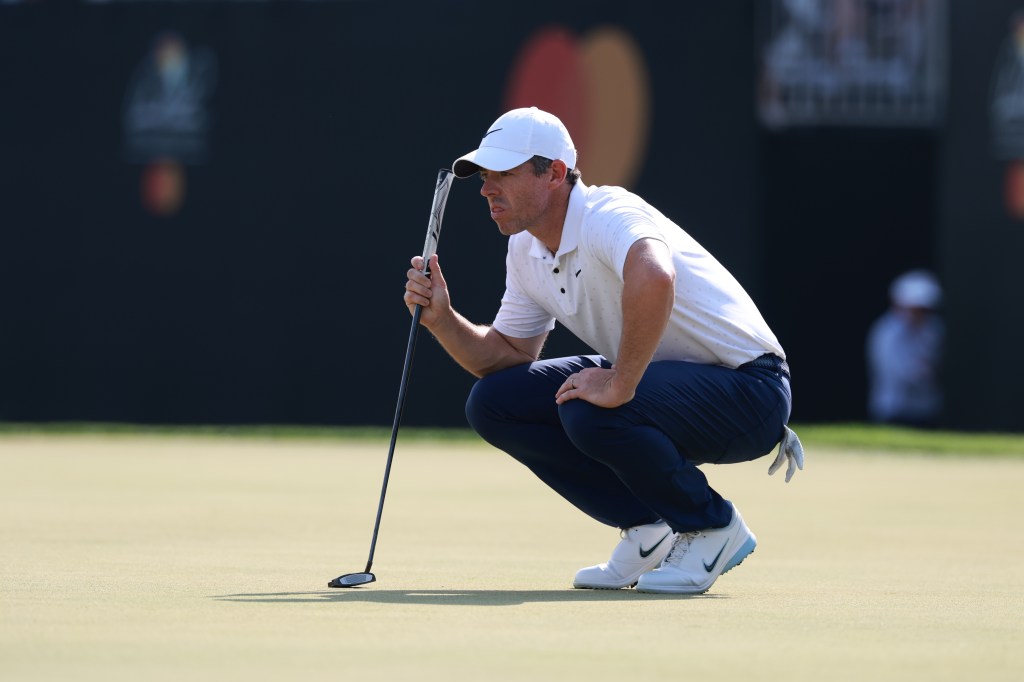
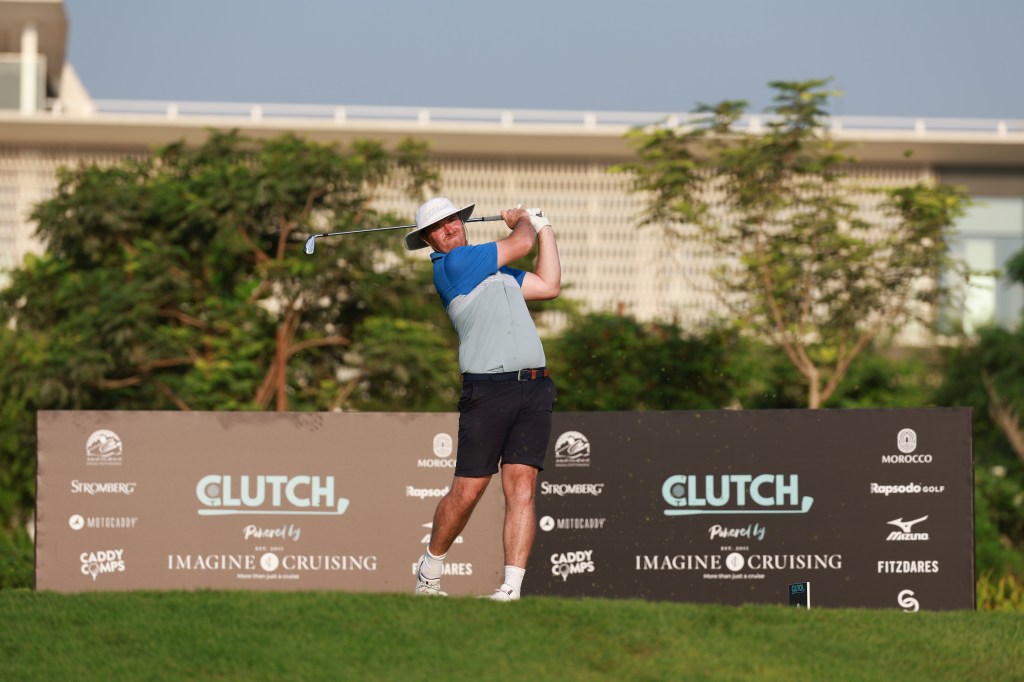
Robert McIntyre teeing off on the 18th on his way to winning the 2025 Alfred Dunhill Championship. I just love this photo sequence of Bob, and that is one of my favourite pictures.Scottie Scheffler in his press conference at the Arnold Palmer Invitational, 2025. A “pinch me” moment getting up close and personal with the best golfers in the game.Jordan Smith on the 18th at St Andrews, Alfred Dunhill Championship. I love St Andrews, it’s such a great place to go knowing all that has gone before. Jordan is one of my local favourites and so that combination is always enjoyable.Rory McIlroy at the Arnold Palmer Invitational, 2025. To be accredited for the US PGA Tour was pleasing as it is a measure of where I have been able to get to with my photography.Louie Walsh in action at the Clutch Pro Tour season ending events in the UAE. I have been with Clutch since the start of their journey and I love what Tom Hayward is working on. I love being able to support the development of golf and it’s great to watch players progress to the next level.Shaun Taylor scores Swindon’s 3rd goal in a 4-3 victory over Leicester. One of my all time favourite photos. I will always remember being on the pitch at Wembley with 92000 in the stadium.Wembley 1990, taken inside the ground. As a result of this photo, Swindon Town gave me my first professional assignment.Tom Sloman in action at the Clutch Pro Tour season ending events in the UAE. I have been with Clutch since the start of their journey and I love what Tom Hayward is working on. I love being able to support the development of golf and it’s great to watch players progress to the next level.
“I lost everything after a really good start. I was in such a bad spot, I missed maybe 12 or 13 cuts in a row. I was too emotional, you know, I was breaking down on the course at times. A lot of my sponsors dropped out. I remember saying, I probably shouldn’t be playing golf. I shouldn’t be doing this.”
Forget everything you thought you knew about life as a professional golfer. Big houses in Florida with 9-hole courses in the back garden. Flying around on private jets. Fame, fortune, strolling up the 18th fairway on a Sunday afternoon to the adulation of the crowd. No, it’s not about that at all. It’s sourcing decently priced hotels and cutting back on transport costs. It’s weighing up how many cuts you can afford to miss. It’s trying to attract the sponsors who can make the whole thing worthwhile. It’s trying to be competitive while working night shifts driving taxis around the streets of Edinburgh. For John Gallagher of the Tartan Pro Tour, it’s been balancing all this with grief and personal tragedy.
In his career in golf, Gallagher has reached a level that very, very few do. For most golfers, the dream is making it to single figures. Get down to scratch and you can swagger into any clubhouse in the country with your head held high. This is another level entirely. Having won the Scottish Amateur, he’s played his National Open, teed it up in the French Open and the Johnnie Walker and has represented his country on multiple occasions. He’s shared a stage with some of the biggest names in golf. And yet, his career hasn’t reached the heights he’d have hoped. It has taken monumental effort and resilience to be where he is today. So what has kept the fire in his belly and driven him on to continue competing?
“I probably thought my golf career would be a lot better than it turned out to be. But I’ve come to terms with it, and I absolutely love the game of golf. It’s kicked me sometimes but there’s something about it that will always keep me coming back.”
Life on Tour
At 44 years old, John Gallagher is one of the elder statesmen on the Tartan Pro Tour. Founded on the back of the Covid pandemic by Ryder Cup legend Paul Lawrie, the tour is based in Scotland and is a feeder to the Challenge Tour. From there, you are only one step from the DP World Tour.
Last month’s Tour Championship at Trump International marked the end of another season on the tour. 45th in the Order of Merit, it’s been a solid season competing against younger men who seem to keep getting better with every intake. There are a wealth top, top quality golfers all competing for just two spaces on the Challenge Tour. And John has seen for himself over the years that they just keep getting stronger, keep hitting the ball further, and keep getting more and more professional in their approach.
14 competitions between April and October, the players must pay entry fees to compete. With no money on offer to those who miss cuts, and limited prize money to those who do, players rely on sponsorships to survive. For Gallagher, most of his funding comes from an annual golf day that he runs at his home course, Dunningston, and from driving a private hire taxi. Last year, he drove all year round, including during the golf season.
“What I did this year was drive in the summer between tournaments, which doesn’t help, because that’s when I should be practising. If I’m driving 7 or 8 hours through the night then I’m probably not the sharpest and I’m not getting the quality practise I need to.”
Nowadays, John is realistic about his goals for the future. He knows he will not make the European Tour; his time fighting for those places has passed. But after a glistening amateur career that saw him ranked the 17th top amateur in the world, it seemed that the world was at his feet. Getting to where he is today has been a constant battle, with the game, with the course, with himself and with everything that life has had to throw in his direction. And the difficulties began as soon as he turned professional.
“Unfortunately, my story is a complicated one.”
Turning Pro- A Lonely World
Gallagher started his life in golf relatively late at 14 years of age, and he turned professional late as well, approaching his late 20s. His career as an amateur was exceptional, and he loved being able to represent Scotland for four and a half years, competing across the world.
Gallagher poses with his Scottish Amateur title.
But very quickly after turning pro, it became clear what a huge jump he had to make. Not just in terms of his golfing level, but of all the logistical and financial pressures that follow. When he was representing Scotland, Gallagher was well looked after. Travel was arranged, schedules were pre-determined, he was a young man and he was able to concentrate almost exclusively on turning up and playing golf.
When you turn pro, everything changes. You’re looking for your own hotels, you’re thinking about how transport is going to work, you’re figuring out what events to play and when and so much more. You are now paying to play in events and playing golf with the added pressure of knowing that, if you miss a cut, you’re travelling back home to your family on a Friday evening empty handed. The more cuts you miss, the less your sponsors are going to be interested in you, and the financial pressures begin to accumulate. The freedom to play golf is replaced with severe pressure to perform, especially as you grow older and have a family to provide for.
Gallagher made a solid start to professional golf in terms of results. But most of the events were in England, usually in the South, and were expensive to enter. He estimates a cost of roughly £800 per tournament- £300 to enter, roughly £200 for a hotel, plus travel costs, food and drink etc, with no guarantee of any money being made.
“It was a great experience but it was so tough. It almost felt like getting back to scratch. You were really looked after on these Scottish trips, really well cared for, you’d rock up at these golf clubs with your passport and everything was done. Suddenly, and I was a bit older, it was just a different world. The travel was hard, the standard of golfer was pretty sharp, there was a bigger pool of players. It was a bit rough and it took me a couple of years to find my feet.”
The early days were a struggle, and he worried about what people back home might think of him. Had he made a mistake? How was he going to put food on the table after a missed cut?
It is noteworthy that, when talking about the difficulties of life in professional golf, the actual playing side doesn’t get that much of a mention. These players are all so good, and the margins so tiny, that whether you make the big time or not can often be down to off-the-course factors. How you deal with the loneliness and the logistical problems. Getting sponsors. The mentality, professionalism and a little bit of luck at the right time.
In spite of the difficulties, Gallagher’s talent began to shine through. He retained his card and went on to win his first events in professional golf in 2011 and 2012. Converting a promising amateur career into a high level professional one felt realistic. However, the first major setback to his career, and life, was just around the corner.
The First Loss
When you add grief to all the struggles of trying to make a living playing golf, you find yourself in an almost impossible situation. This is where Gallagher found himself after his mother’s passing. He continued playing, hoping he could get his head down and get through it. It wasn’t to be. He found himself uncharacteristically emotional on the course, and a string of 12 consecutive missed cuts followed.
Professional golf is brutal and unforgiving. As the missed cuts totted up, the sponsors began to lose interest. In acrimonious circumstances, a 5-figure sum promised to him was taken away, and suddenly his entire career looked in danger.
While he’s made great friendships over his career in golf, there is always the knowledge that everyone is ultimately your competitor. It can be hard to be open and talk when you are surrounded by people trying to take the money out of your pocket.
“You don’t really tend to open up to your fellow competitors. We had a great camaraderie, but you wouldn’t want to show weakness. I wasn’t in a great spot, but I don’t think I ever was on that tour. When you look at the Dechambeau’s of the world, they talk about “teams” a lot, generally they’re surrounded by people who are helping them. Luckily, I’ve been able to lean on my Dad and my wife over the years.”
The loss of his mother was a crushing blow. A woman who, along with John’s father, made many sacrifices to help him get started in golf and in his career. Taking after his Dad, he worked as a greenkeeper after leaving school at 16. When it became clear that he had real talent, and that being able to compete in National competitions was almost impossible while trying to hold down that job, they decided to give him two years freedom to play.
“Finances weren’t great at that time. It was tough for them. I’ll always be indebted to them for that.”
Gallagher’s decision to continue playing through the grief is one that he looks back on with regret. He needed a break, time to process things. But in a pressure cooker situation, where financial security and your entire future is on the line, it is easy to see why somebody would feel the need to play on. Tragically, this loss wasn’t to be John’s last.
Ivy
Trying for their first child, John’s wife, Lisa, fell pregnant. A little girl. After a full term of pregnancy, devastatingly, Ivy was lost just before birth.
It is impossible to imagine suffering this kind of trauma and trying to carry on playing golf. Trying to carry on doing anything, in fact. This time around, Gallagher realised that golf had to be put on the back burner while he concentrated on looking after himself and his partner. It was pointless to try and focus on anything else.
“That was a really tough time in our lives, no doubt. I still carry the burden. People think and ask, even close friends, “are you moving on?” I don’t think you ever move on from losing parents or losing children. What I think happens is that you never get over it, you just get stronger. The grief is still the same grief, you just learn to carry it better.”
As well as taking a break from golf, Gallagher also did something that he wished he’d done sooner, after the loss of his mother- talk to someone. And it is abundantly clear how much that has helped him. Not to move on, but to get stronger.
“I probably should’ve asked for help before but I didn’t, just being a guy I probably thought “I’m just gunna get through this.” When my daughter passed away I did get counselling, and it was amazing, it helped me so much and probably made me the person I am today. Because I’m very open and I’ll chat to anyone, and probably being in the taxi and speaking to people helps with that as well.”
With the tragic loss of Ivy, Gallagher had hit rock bottom. But counselling, along with the love of his wife and his family, would help him fight his way back both personally and professionally.
Gratitude, Hope, and Love for the game
While John’s story of life in professional golf has had more than its fair share of challenges, it is fair to say that it is built on a foundation of wholehearted love for the game. He loves playing, he loves competing and he loves the feeling of sitting back after a round and debriefing with his father. Whatever the level, we can all relate to that.
“I love what I do and I love competing. It’s kicked me sometimes but there’s something about it that just brings me back. It almost feels like it hurts so much because it means so much to me. But I’ll always play golf because I absolutely love it.”
The Tartan Pro Tour has offered a lifeline to John, and many other Scottish golfers. The chance to continue competing at a high level without the monetary costs of travel, hotels and the emotional cost of having to spend so much time away from family.
His goal for next season is to win a tournament, and he knows he will need to be at his best to do so. If finances allow, he is considering competing in England on the Clutch Pro Tour, as well. And there is always an eye on what sponsors could come on board and potentially change the dynamics of everything.
While there is still a lot to compete for, there is also a lot to reflect on and to be proud of.
“I’ve had some great highlights when I think about them. When I have felt down over the years and when I’m feeling a bit weaker I think to myself I should feel proud that I’ve played in the Scottish Open, because not a lot of people can say they’ve played their national open. Doing it with my cack-handed grip has made it a lot sweeter.”
Gallagher’s “cack-handed” grip in action.
He’s learned a lot on the way. Primarily, that family comes first. He describes his Dad as his best mate, and he has a wife who loves and supports him through everything. After the tragedy they suffered, they now have a 5-year-old boy called Mason who “is amazing, absolutely brilliant.” He has found happiness in his life, and that is something that golf alone cannot bring you, even if you reach a level where mansions in Florida, private jets and adulation from the crowd become a reality.
“I talk to my wife about this. Being successful- this is something I have learned in my life. Happiness is success. Define success when you don’t know what trauma and grief is and it’s like: “I want to play in the open, I want to play in the majors”. I know people who have achieved this and it still hasn’t made them happy. I feel very fortunate to be where I am.”
What other advice would he give to young players making their way in the game? He is a big believer in doing things your own way. He never had a lesson as a junior, and adopted a grip that you will not see recommended by any coaches, “cack-handed”, with his left hand below his right. He has heard mutterings from the galleries, most notably when teeing off at the French Open. He doesn’t speak French, but the whispers didn’t sound complimentary. He followed it up with a 300 yard drive straight down the middle of the fairway. Proving people wrong. Again.
The worries over what people thought about him after he turned pro, how much money he was making, he knows now that he shouldn’t have wasted energy worrying about such things. He is long enough in the tooth to know that you should never pay too much mind to what people think about you. In life, in golf.
Many of the lessons that John has learned from golf over the years can be taken into everyday life. That’s one of the beautiful things about this sport. It teaches you so much about yourself and your temperament. From the way you carry yourself on the course, to the respect you show your opponents, your honesty, your ability to keep calm and overcome obstacles that are thrown at you relentlessly.
As in life, golf can wear you down. Whatever level you play at. Life is hard. Golf is hard. You map everything out, try your best but you can never be truly prepared for whatever it throws at you. There’s only so much you can control. When you’re at your best, it feels like nothing can stop you.
The long, carefree summer nights where he played until the sun finally went down are where John achieved the level of zen on a golf course that everyone aspires to. Once real life takes hold, you realise what a priceless, fleeting feeling that is.
“You’ll never get that enjoyment of being 15 or 16 and playing with your mates. If you could bottle that feeling up and take it into professional golf, dare I say it, I’d probably have reached a higher level.”
Golf ultimately had other plans. But for John Gallagher, the fire remains in his belly. The love for the game is as strong as ever. That’s why, as he takes the time to talk to me on a cold autumn night, he’s in the car park of a driving range. Mason put to bed, the grind continues for another year. He’s had some challenges on the way, but he’ll never give up the fight.
John wishes to thank two of his long-time sponsors, Owen Hall and Jeff Linroth. Cherished friends who have helped ensure that playing competitive golf has remained a reality.You can follow John on Instagram @johngallaghergolf, and us @from_theclubhouse or on X @FTClubhouse.