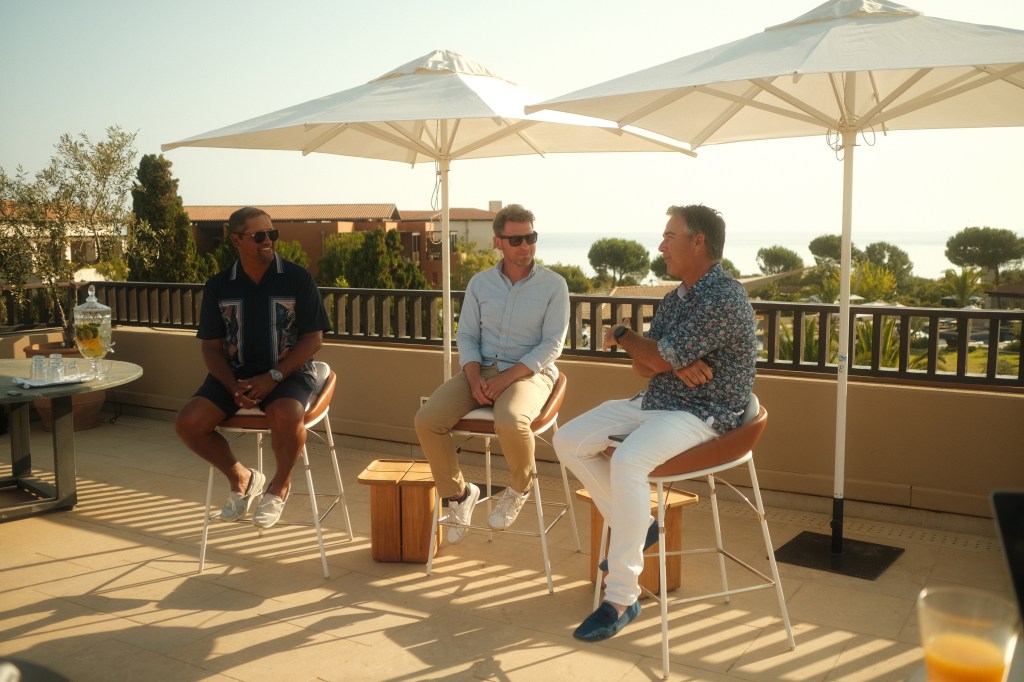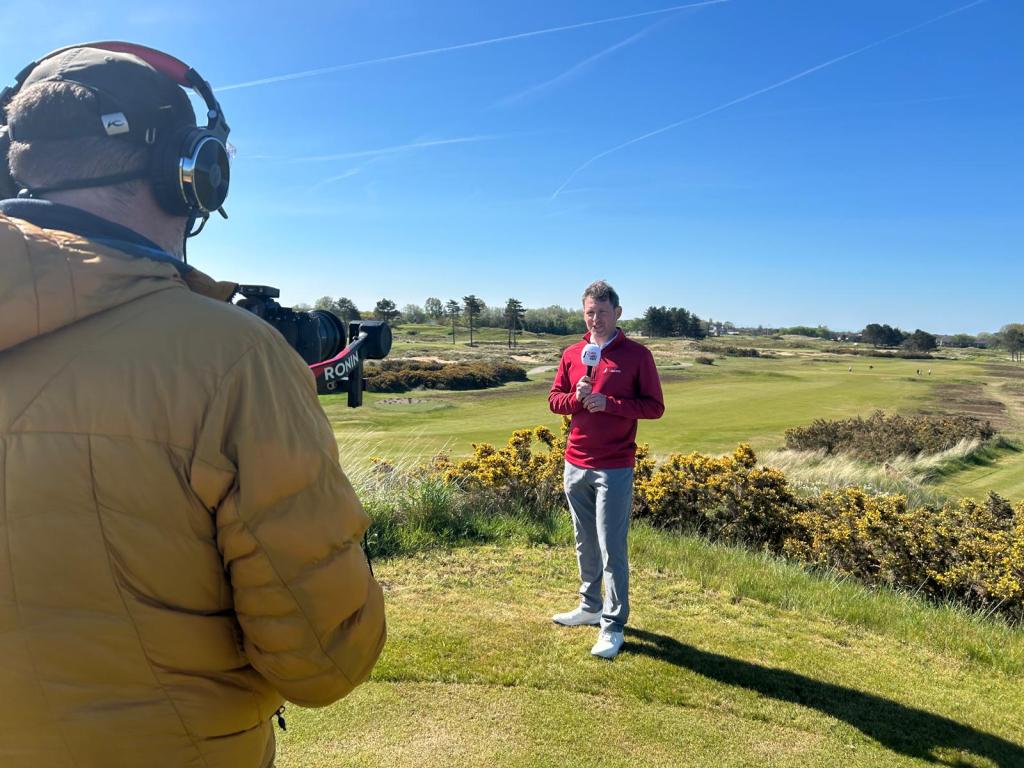
There aren’t many people who have seen golf from quite as many angles as Kit Alexander.
From live broadcasting to writing, equipment testing to working inside the ropes, he has seen the game up close and personal. He has seen the realities that sit beneath the surface, not just for the players, but for everyone trying to forge a life within the game.
Whatever your role in professional golf, there are huge stakes. Massive rewards professionally and financially are on offer, but only to a small handful. On the other hand, struggle and uncertainty reign supreme. This clubhouse tale comes from behind the scenes, golf from a vantage point few have witnessed.
“I could be the 7th best lead commentator in the world, but if there are six live golf events that week, that means I’m out of work. If I’m 7th best at anything in the world, I’m probably doing quite well. That’s a very over-simplified, somewhat ridiculous way of looking at it, but it’s the reality of the situation.“
Behind the Broadcast
The first thing to say about Kit Alexander, is that he absolutely loves his job. Why wouldn’t he? To most people trying to make a living somewhere within the golfing eco-system, he is living the dream. That being said, it isn’t without its challenges.
The most obvious challenge professionally is the sheer variety of what he does, and the amount of moving parts that go into any single piece of the puzzle. You name it, if it’s to do with golf and media, Kit is probably doing it. As a result, there is no such thing as a typical week. That can make things complicated at times, but is also part of what makes the job such a joy.
Originally specialising in print journalism, Kit spent the first decade of his career writing for Today’s Golfer Magazine. After being spotted by Dan Godding at a EuroPro Tour event conducting an interview with a player, he transitioned into broadcasting, hosting a 2-hour highlights show for Sky Sports. After a little while establishing himself, things began to snowball.
“I’d been doing that for a while and I was like, what’s the next step? Where am I going? I was offered the opportunity to present and commentate on highlights of the Rose Ladies Series, and in the April I did my first ever highlights commentary. In June, I was asked to do my first ever live commentary which was the Women’s Amateur Championship, and by July I was commentating on the Open Championship. In the space of 4 months I went from my first highlights commentary to commentating live at the Open.”
With no prior experience or training in broadcasting, Kit had to learn on the job. And he had to learn quickly. If you don’t take your chances in this field, you won’t get too many second opportunities.
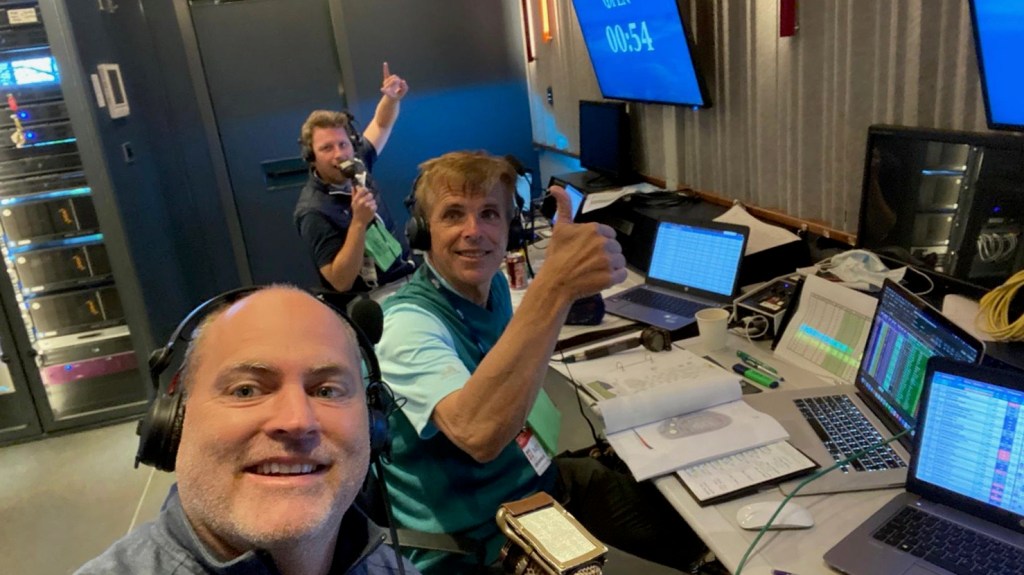
There is so much to think about, and so much work behind the scenes that you’ve probably never thought about before. To take one aspect of his job, commentating. Within that, there’s a big difference between being the lead man, and a co-commentator. On the one hand, you are expected to lead the broadcast for long periods of time, building the narrative and telling the story of the tournament, bringing in expert opinions as and when. Co-commentary is a different skill entirely, requiring a different approach entirely.
And then, there’s the difference between commentating live and commentating on a highlights package. In one, you are riding the wave of the day’s action, never entirely sure what is coming next. On the highlights package, you have significantly less time to paint the overall picture, and you have to do so skilfully in the brief moments between shots. To someone not so used to this work, you can imagine it being difficult to transition between the two. Difficult, as well, to bring excitement if you know already what is going to happen next.
“You get sent a shot list. Typically in golf highlights packages you get “As-live golf“ and “Montage golf.” With montage golf, you see a few shots back to back, a bit of music in the background, and you’re catching people up on what’s happened while you see one pivotal shot from that player. In the 20 or 25 seconds you’re watching the player make that putt, you’re telling their story. I will script those bits, you know what they’ve done. In the “as live” bits, even in the highlights, I try not to specifically know exactly what has happened and what the exact shot is. You’re going to know generally what happens, but I try to keep it as true to live as possible even though its a highlights package.“
At any event he goes to, he must focus on more than just the commentary. He’ll travel on a Monday or Tuesday, and start with player interviews, preparing notes for the event and getting to know the course. Once the tournament starts, there are pre and post-round interviews, and constant monitoring of the event to figure out where the big stories are and who to talk to.
And that is what he loves. Telling stories, and adding something for the viewers of an already exciting sporting event.
There is more work that goes into it. Work that he enjoys less. Having always opted to go without an agent, there are the more awkward tasks that need taking care of. As a freelancer, that involves negotiating fees and contracts, making and maintaining connections and relationships. Ultimately, filling up his diary and ensuring that he has enough work.
Golf is a fickle business that can quickly change on you. Kit knew that already, and experienced it first hand when losing a significant contract last year, commentating on the Legends Tour. Part of an overall change of direction for the tour, it lead to what he describes as probably the toughest point of his career. Things are going so well, and then suddenly you’re worrying about putting food on the table.
“For me, commentating, presenting, interviewing- that’s a joy, that’s the easy side of it. It’s the business and logistics that are harder and is something that doesn’t come as naturally to me. The biggest challenge is that I have a young daughter and a family to support. You can be left in a position where you’ve lost work, and you have bills to pay and you have to recover from that. There’s no guarantees.“
The Fine Lines
Kit has been in the business long enough to have seen up close and personal just how tough things can be. From his unique vantage point out on the course, face-to-face with players of all levels, he has seen potential prodigies fall at the wayside and others make their way to the very top.
One example he gives is of Richard Wallis. He became the Guinness World Record holder for achieving lowest score in a professional round, shooting a 59 on a par-73 course. Competing on the EuroPro Tour, feeder to the Challenge Tour at the time, he was widely expected to go on and get a tour card. He was invited to partake in four big European Tour events, due to his PGA status. This meant he missed four EuroPro Tour events, and the earnings that came with them.
At the end of the year, he was £100 shy on the earnings list for qualification to the Challenge Tour. He never got close again.
“I don’t know what he’s up to these days, but shout out to Richard Wallis. I hope he’s happy and having an amazing life. But it just shows the breaks. At that point, you’d have thought “well, he’s good enough to go and do it again” but he didn’t.“
On the flipside of that is someone like Dan Brown. At the season closing Tour Championship on the EuroPro Tour, on a miserable October day, he needed a par on the 18th to secure his card for the Challenge Tour the next season.
“It was a really difficult finishing hole, a long par 4. He’s 80 yards short of the green after two shots. Back right pin, pretty spinny, off a wet lie, tough to get it close. He hits a lovely pitch into 5 feet and holes the putt. If he hadn’t made that par, he wouldn’t have been promoted to the Challenge Tour. He may never have got the opportunity to get promoted again.“
Dan Brown is now a PGA Tour player, living the dream, teeing it up with the best in the world every week. Richard Wallis is likely still wondering what might have been.
Everyone needs a little bit of luck in golf. Player, coach, or broadcaster. Anyone in Wallis’s position would have taken the opportunity to play in those big European Tour events. If he could go back and just make one more cut on the EuroPro, his whole life could have taken a completely different trajectory.
Of course, while it could easily have gone another way for him, Dan Brown would tell you that his up and down wasn’t just luck. Stepping up in the big moments is a major part of making it in any professional sport. Kit would agree.
“If you’re going to have a good career, just keeping the same level under pressure is a good place to be. The best golfers in the world get better, they find another gear under pressure, figure something out and raise themselves to a situation. Even at that lower level, trying to win on the EuroPro for the first time or going to a Tour Championship, the pressure is as real and as tangible as trying to win a major.
But luck and timing is a big part of it. We all want to say “If you’re good enough, you’ll make it.” I’m not sure I buy into that. There’s no guarantee.“
If thriving under pressure and getting a bit of luck at the right times is what a professional golfer needs, what does a professional broadcaster need to make it to the top?
In terms of his standing in the industry, he’s not a Nick Dougherty or Andrew Coltart, he says, but there’s no denying that he’s been incredibly successful so far. If the sliding doors moment for Richard Wallace was in missing out by £100 on promotion to the Challenge Tour, and for Dan Brown it was that world class up and down on a cold October afternoon, perhaps for Kit it was the day he was spotted by Dan Godding and encouraged to get in front of the camera. The right place at the right time.
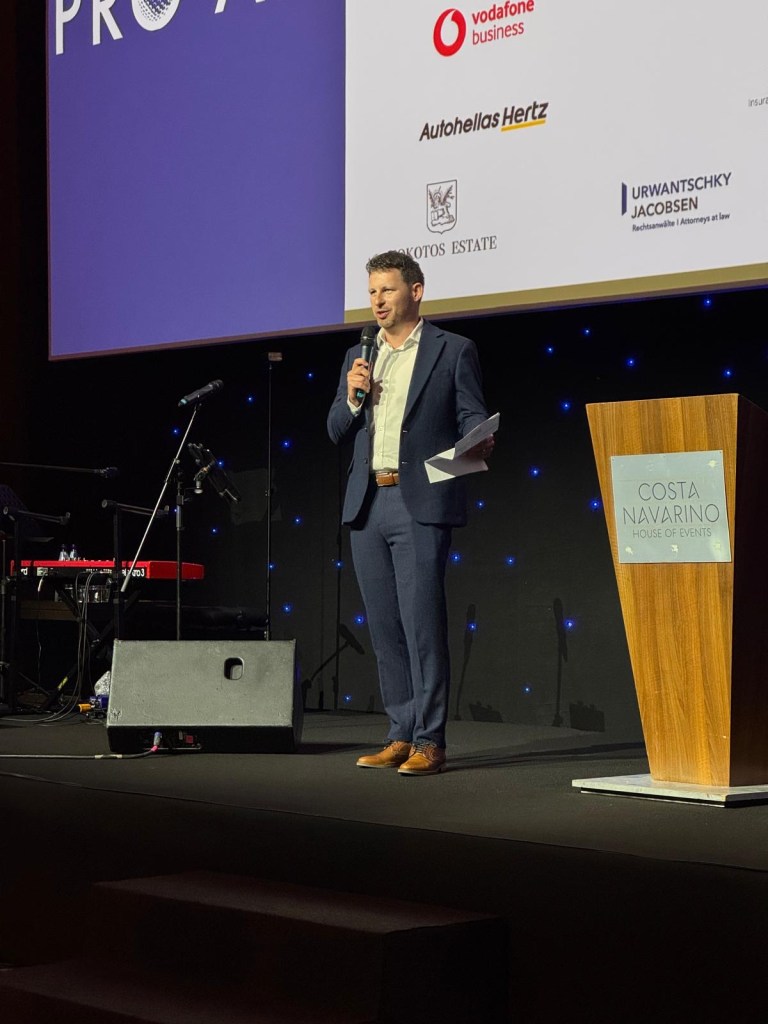
Like the players, however, he’s also had to be exceptional. There is no second option than to be exceptional to make it in this game.
One thing that Kit feels that he brings to the table is his journalistic background.
“What is key for me, is that my journalism background is at the heart of everything I do, and I bring that to broadcast. I think in this day and age we’re so used to seeing former players and former stars on television and radio. They offer incredible insight that someone like myself, who hasn’t played at the top level, can’t do. But you do need within that someone who is coming at it from a different angle and looking at things in a different way- telling stories and building the narrative.“
Like the players, when chances have come his way, he has taken them. In his own way, he has performed under pressure and stepped out of his comfort zone. Perhaps that is the route to success in whatever it is that you are chasing.
Yet, even as someone who you would say has “made it”, his position is still fairly precarious compared to other career choices. Likewise, as a player, making it to the PGA Tour in itself doesn’t mean your work is done. You can never rest on your laurels, there is always someone in waiting, and your levels can never drop. So what makes it all worthwhile?
The Motivation
“It’s a fine line, and when it’s going well, the rewards are large. But there’s a big drop off. If you’re working one week, it’s great, you can earn a lot of money and have a great time. If you don’t work that week, you’re sat at home and there’s no money coming in. But that’s what we all sign up for, whether you’re a golfer, a broadcaster, camera operator…across the board, we all know what we’ve signed up for, and we do it because we love it.“
For Kit, at the heart of it all, above even the financial rewards, is the absolute love for live sport, for storytelling and for the game of golf.
Golf is unique in many ways. Its live experience is one of those ways. Kit tells of how he has seen on multiple occasions players interacting with fans, thanking them for following them around that day. You can get up close and see just how good these players are at their craft and in a lot of cases they are truly grateful for your support.
He recommends anyone to go and watch a live golfing event. You get a truer reflection of the real ability of the players. For better, and for worse. You hear the sound of a flush iron and it’s nothing like you’ve heard playing in the Saturday chuck-up. Likewise, you see the shots that perhaps weren’t remarkable enough to make the TV coverage and realise that they are humans after all, who have to dig deep to put a round together.
It’s also about moments. Sporting, and personal. Little pinch-yourself moments. One stands out in particular.
“I remember being at the Open Championship for the first time. All the world feed commentators stay in the same hotel. So I’m in this Boutique hotel with John Morgan, who’s one of my best mates, Frank Nobilo, Thomas Bjorn, Tony Johnstone, all amazing commentators and former golfers. Sam Torrance was pouring me a whiskey. It was a position that would’ve been inconceivable to me even a few months before that. I’m at the Open, listening to these people telling stories and talking about Rory McIlroy’s wedge game, and I thought, how have I ended up here? I remember going outside and messaging a couple of people, my now-wife and a couple of friends. I couldn’t believe what was going on, I’m having a whiskey with Sam Torrance!“
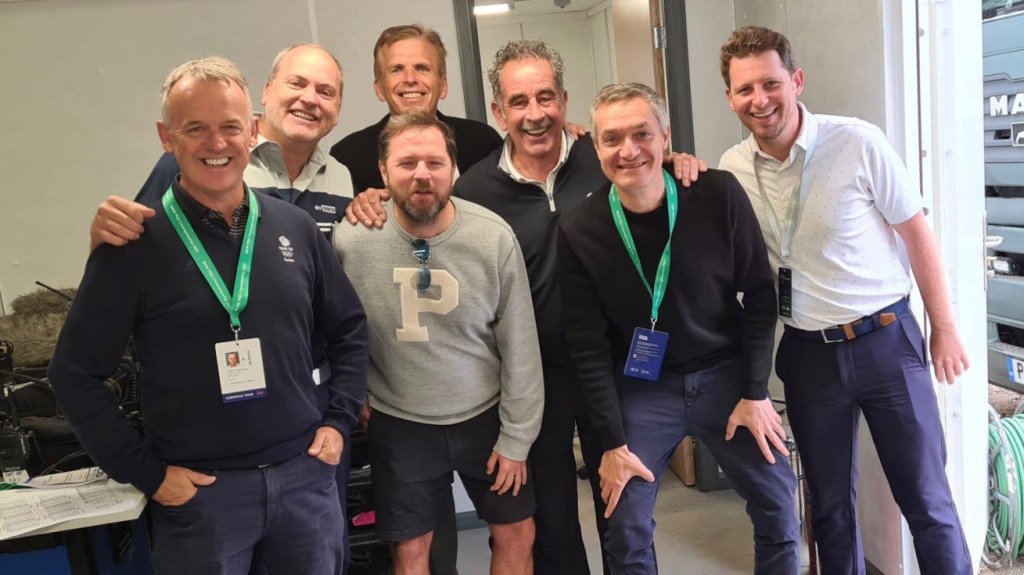
He also cares deeply about the game and its future. Now, more than ever, with major fractures in the professional game and funding from controversial places, it is vital that the game has people who truly care at the heart of it.
Kit is due to be part of Blitz Golf, which he describes as attempting to bridge the gap between tradition, which remains such a large part of the sport, and a new audience who increasingly turn to short-form content. Pros, celebrities and influencers combine in a shortened format which is coming to England this summer.
“This is a great time for golf. There is money in the game, whether you agree with where that money is coming from in certain instances. There are new audiences coming through, and we just have to make sure we handle that in the right way moving forwards.“
Talking to Kit, his love for golf clearly goes beyond the professional game. Particularly now that he has a family, his thoughts are not just on the future of professional golf, but also on the grassroots. Making the game affordable and accessible to all is a priority, and he sees himself, and anyone involved in the game, as custodians.
“As you get older, and have children, it makes you think and reassess what impact you’re having. I’m talking about golf, I’m not saving anyone’s life. But if what we do in some way impacts the world in a positive way, then that’s fantastic. If someone can flick on their TV screen and brighten up their day a little bit by watching a bit of golf, then that’s valuable. You want golf to be healthy, and impact as many people, all over the world as possible.
We all know what we gain from playing golf. 99.9% of people are playing it as a leisure activity. Tours are the tip of the iceberg. Getting out for 4 hours, interacting with people, having a walk, there are physical and mental benefits. We are the beneficiaries of that right now, and it is absolutely our responsibility to make sure that continues, that golf remains accessible to people. You want to leave the world in a better place than you found it, essentially. If I as an individual can leave a positive impact on the little area I exist in, then the world will be a better place.“
In just a one hour conversation, you get the overwhelming feeling that more voices like his are what golf needs at the highest level. People who understand and appreciate heritage and traditions, while also caring deeply about the future.
In another life, Kit says a dream would’ve been to present nature documentaries, following in the footsteps of David Attenborough. If golf broadcasting feels quite far removed from that, you must never have heard of Peter Alliss. While he is quick to talk down his impact on the world compared with other professions, his approach to golf is to be celebrated.
Golf has given him a lot, and he plans to give a lot back. On the tough days when things are hard, the future seems uncertain and diaries need filling, what greater motivation can there be?